When planning the construction of a private house or the modernization of the sewage system, in 2026 the main issue is no longer only convenience, but compliance with the strict environmental protection requirements and Latvian building regulations (LBN 223-15).
We, DM Grupa, work with the highest quality
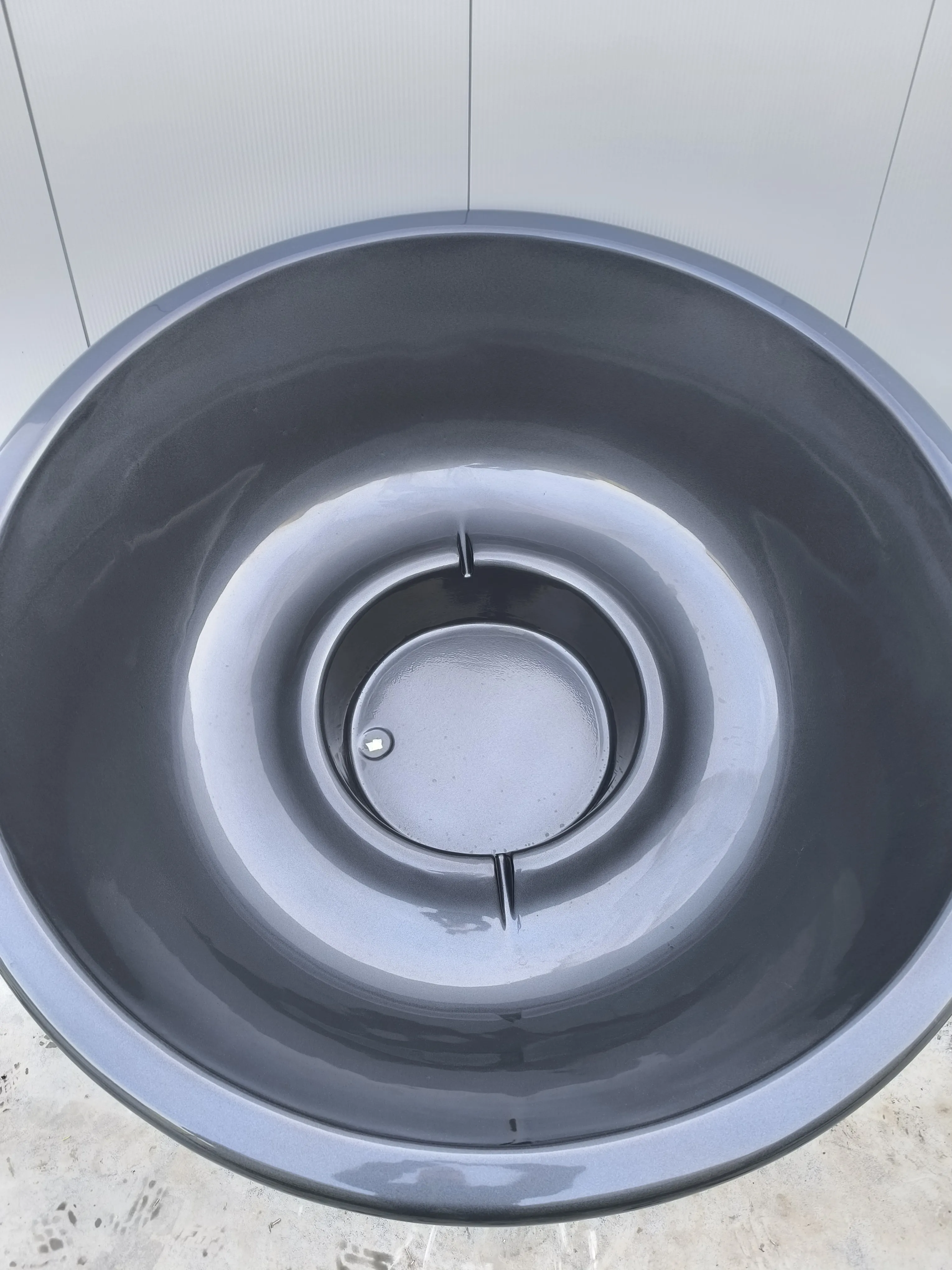
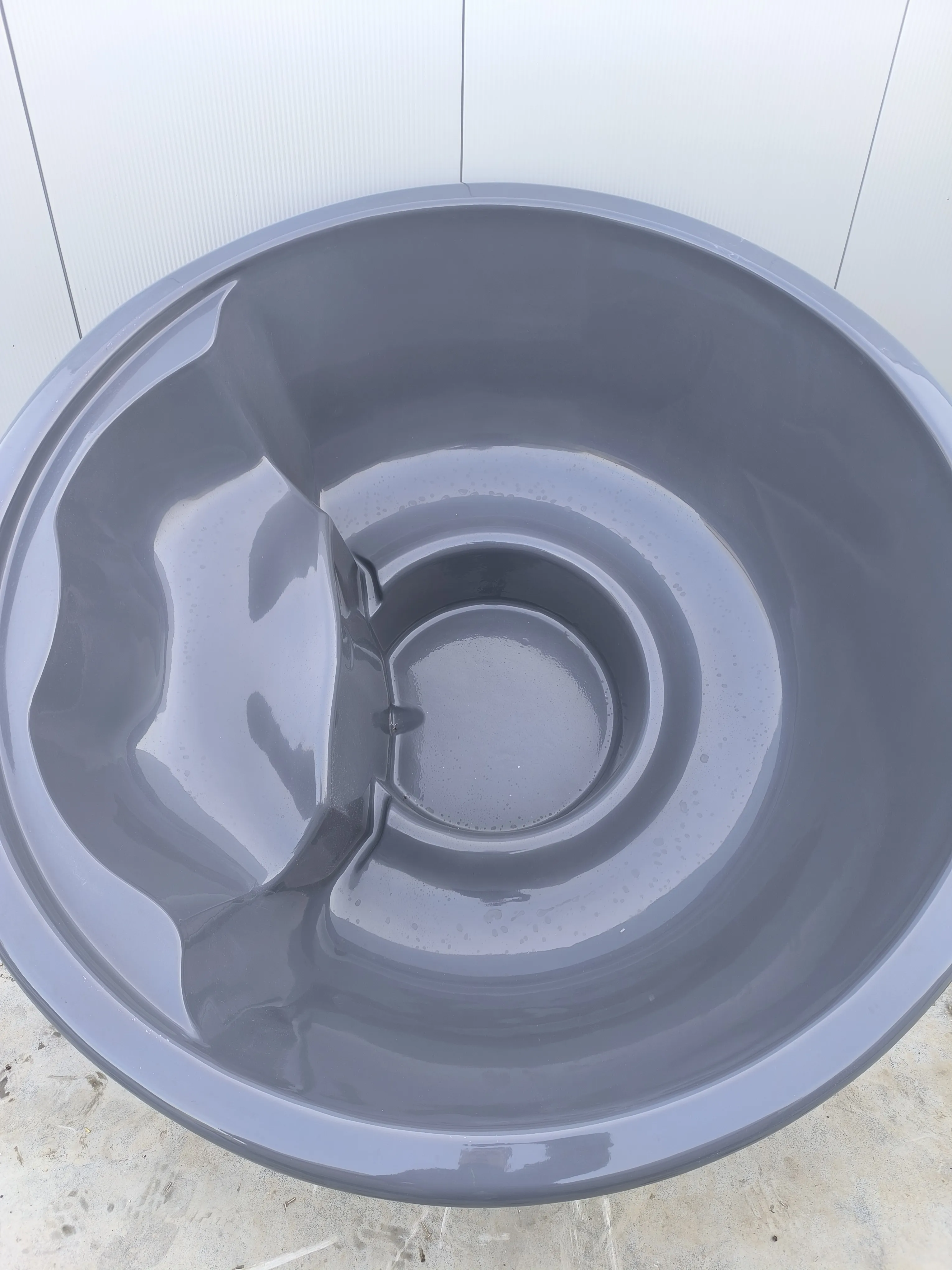
fiberglass
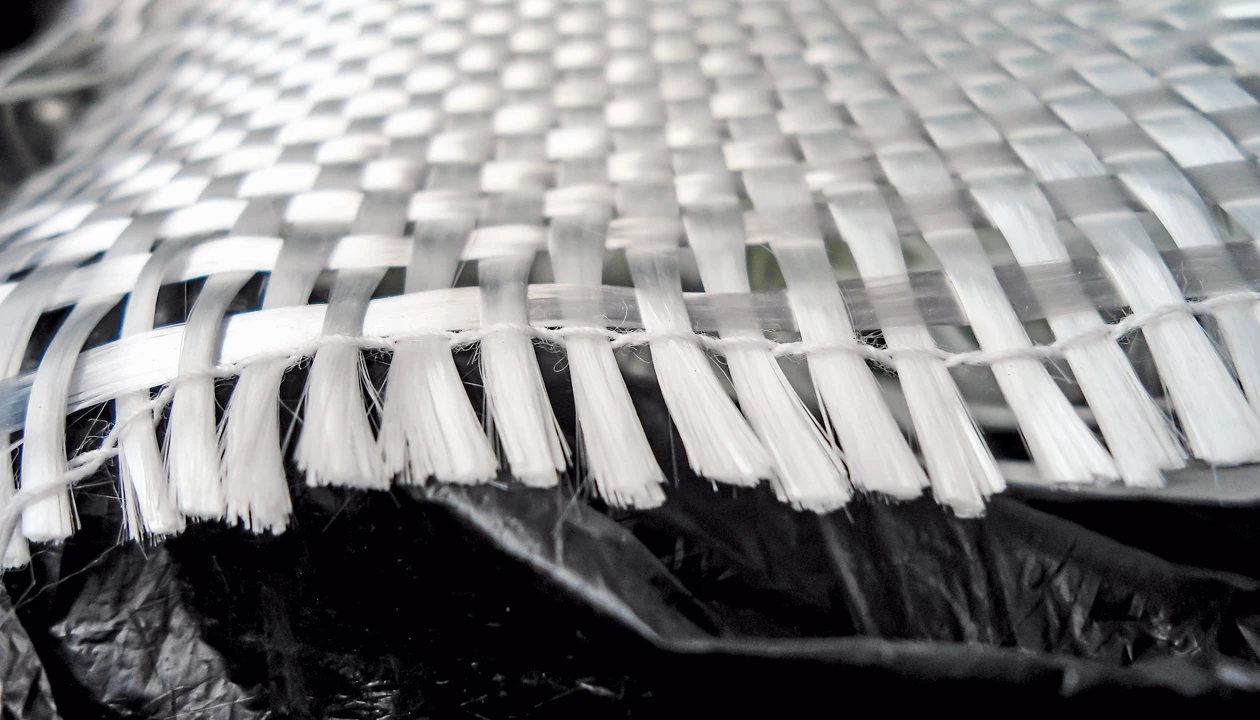
Glass-reinforced plastic (also known as glass-reinforced plastic or GRP) is a composite material consisting of two main components: glass fiber and a binder (usually polymer resin). Put simply, fiberglass is a material in which the fiberglass provides strength, while the plastic (resin) holds these fibers together and gives the product its shape.
1. Storage tank: when simplicity is the only choice?
The storage tank is a completely sealed, hermetic fiberglass tank. All sewage is collected and later removed with a sanitation machine.
- When to choose? In densely populated areas or areas where the groundwater is unprotected and any water infiltration into the ground is prohibited. According to LBN 223-15 paragraph 152, this is the most common solution for seasonal buildings or places where connection to the city network is planned.
- To calculate: An average family of 4 people produces 8-12 $m^3$ of wastewater per month.
- Pros: Low installation costs, 100% safety against environmental pollution.
- Disadvantages: High maintenance costs (frequent sanitation).
Tip: To avoid an overflowing reservoir just on the weekend, we recommend installing a level sensor.
2. Septic tank with infiltration: proven value
A septic tank is a system in which wastewater settles mechanically (the tank serves as the first stage, purifying about 30%), but further purification takes place in the infiltration field through the soil.
- When to choose? Only in regions with well-protected groundwater and sandy soil. Point 151 of LBN 223-15 allows the use of septic tanks if the capacity does not exceed 5 $m^3$/d.
- Pros: No electricity is required, low maintenance costs (cleaning 1-2 times a year).
- Cons: Do not drain into ditches or water bodies. A large area is required for the infiltration field.
3. Biological treatment plants (BTP): 2026 standard
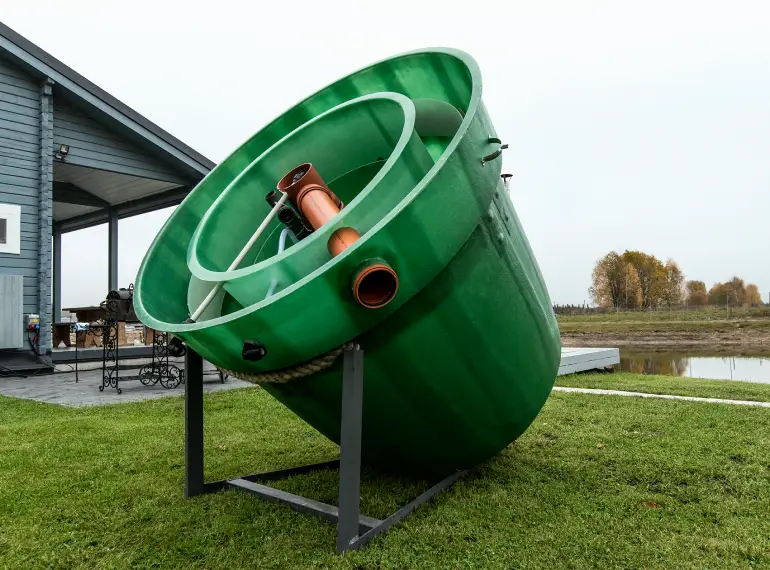
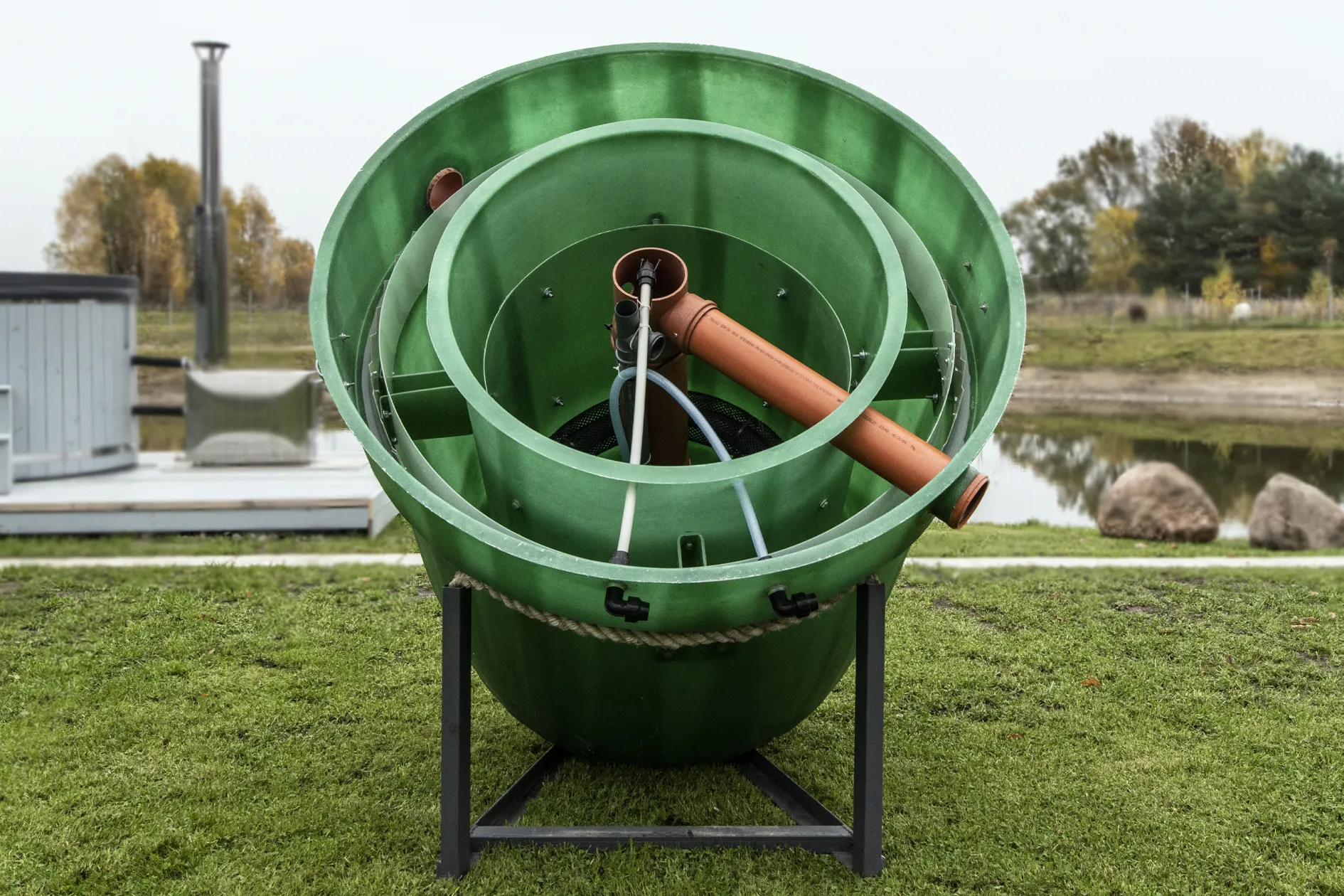
BTP is a compact station where bacteria and microorganisms break down organic matter with the help of oxygen, purifying water up to 95-97%.
- Why is it a winner? It is the most modern type that meets the LVS EN 12566-3 standard. Purified water can be drained into drainage ditches or even ponds (with appropriate approval).
- Pros: Minimal space, environmentally friendly, long-term economy.
- Cons: An electrical connection to the compressor is required.
The truth about bacteria and additives
Many advertisements rush to buy additional bacteria. Here's what science (EPA data) and our experience say:
- A healthy system does not need additives. Man-made wastewater already contains all the necessary bacteria and enzymes.
- When do they help? Only when the microflora is damaged by aggressive chemistry (chlorine, pipe cleaners, strong antibiotics).
- What to avoid? Do not use inorganic acids, alkalis or organic solvents - they even eat concrete and kill "good" bacteria, damaging the expensive equipment.
Main conclusions for the choice
| Criteria | Storage tank | Septic tank | Biological installation (BAĆ) |
|---|---|---|---|
| Installation location | Anywhere, also in cities | Only in the countryside (sand) | Anywhere (also in clay soil) |
| Electricity | Not required | None required | Required |
| Drainage | Removal only | Soil infiltration | Ditch, pond or soil |
| Compliance with LBN | High | Medium (restricted) | Excellent (2026 standard) |
Engineering advice from DM Group:
When choosing a system, pay attention to the material. According to LBN 223-15 clauses 56 and 68, glass fiber (glass plastic) is one of the recommended materials due to its hermeticity and corrosion resistance. Compared to concrete, the surface of fiberglass is smoother, which ensures better self-cleaning and less sediment formation in pipelines ($I = 1/d_i$).
Conclusion: Who wins?
- In this year, the undoubted winner is the Biological treatment plant. It gives freedom in terms of water drainage and guarantees that you will not have problems with environmental services
Recommended Products
Related Articles